5 Secrets You Didn’t Know About Sigiriya Rock Fortress
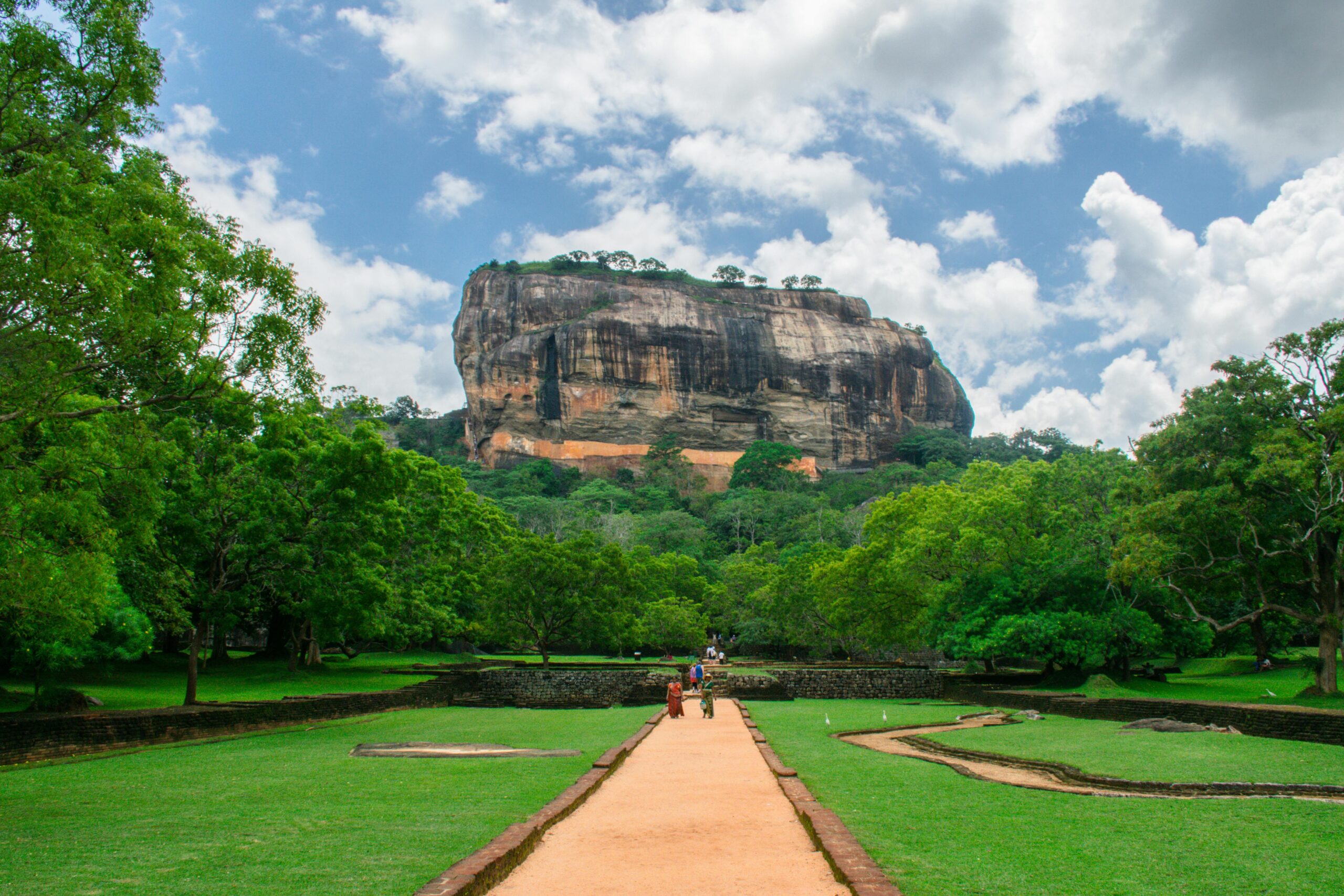
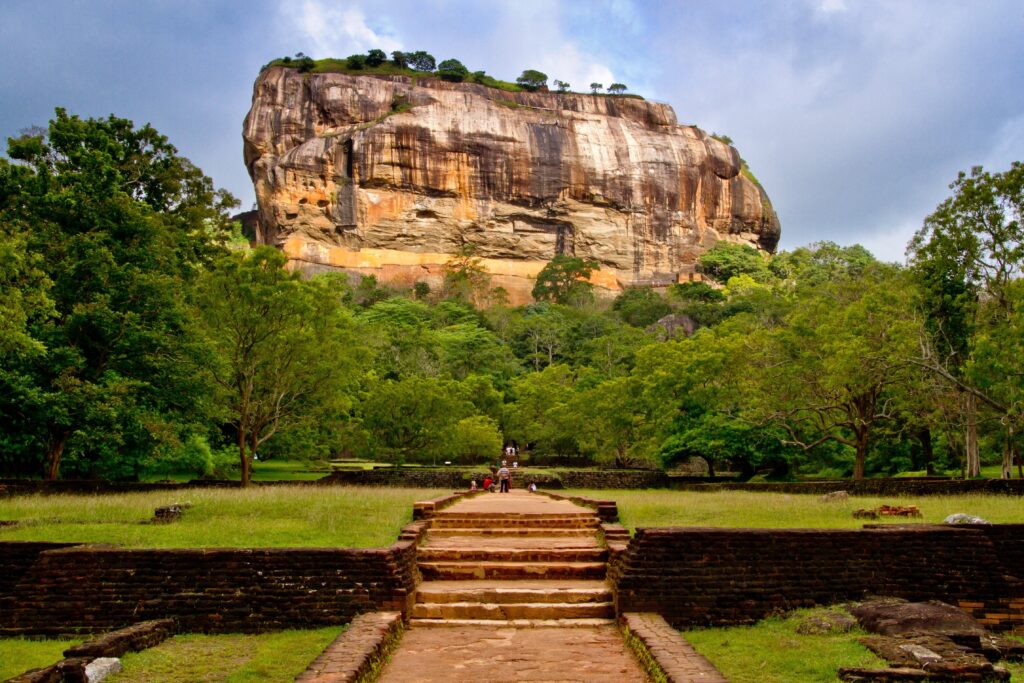
Sigiriya, also known as the “Lion Rock,” is a stunning ancient rock fortress located in the central Matale District of Sri Lanka. Dominated by a massive rock column nearly 200 meters high, it is a UNESCO World Heritage site and is often called the 8th wonder of the world. Building a palace atop such a rock was an architectural marvel in the 5th century.
If you are planning to visit this incredible historical destination, here are 5 fascinating secrets and facts about Sigiriya that you probably didn’t know.
1. The Tale of Two Royal Brothers
While Sigiriya is famous for its stunning structure, its history is marked by a tragic and dramatic royal feud. King Kashyapa built the fortress in the 5th century AD. He was not the rightful heir to the throne; he was the son of King Dhatusena and a non-royal consort. His rightful brother, Crown Prince Moggallana, fled to India to gather an army. Fearful of his brother’s return, Kashyapa moved the capital from Anuradhapura to the secure and defensible location of Sigiriya.
2. The Mysterious Sigiriya Frescoes
One of the most captivating features of Sigiriya is the “Fresco Gallery.” Located in a protected sheltered pocket on the rock face, these are beautiful paintings of ladies that have survived for over 1500 years. Originally, there were believed to be around 500 such paintings, but only about 22 remain today. The identity of these women is a mystery—some believe they are King Kashyapa’s concubines, while others think they are celestial nymphs.
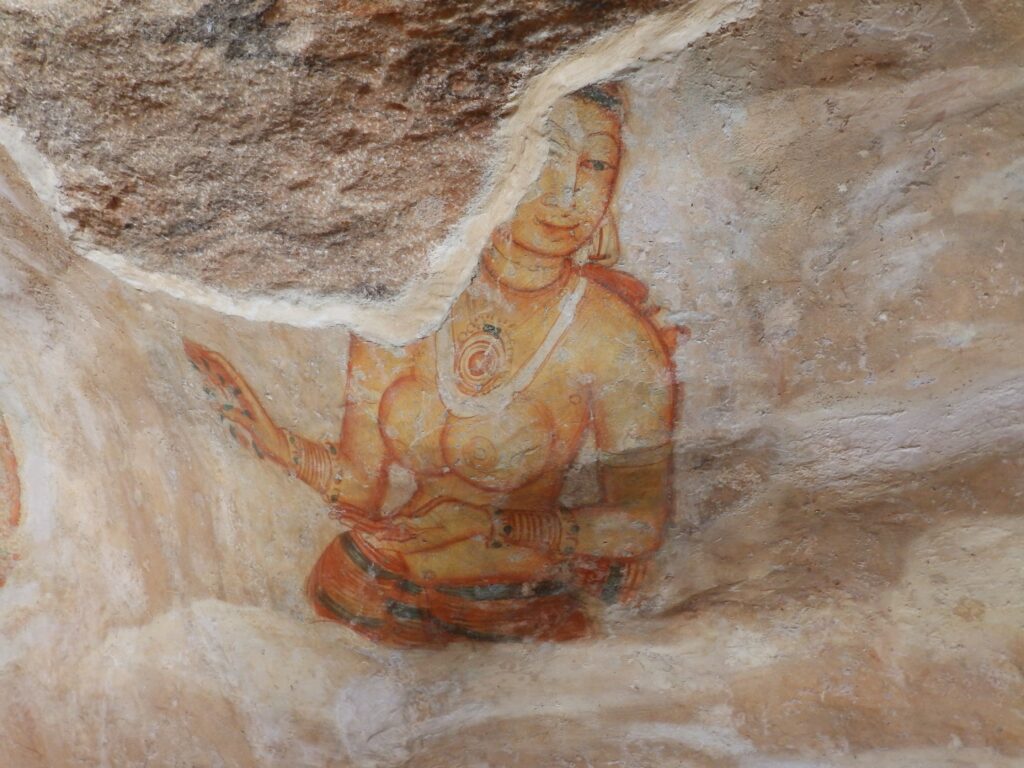
”The Sigiriya frescoes are not just paintings; they are the smiles of a golden era, still glowing with beauty after 1500 years.”
3. The Mirror Wall: An Ancient “Guestbook”
Just below the Frescoes is the famous Mirror Wall. This wall was originally so highly polished that the king could see his reflection as he walked past. Over centuries, visitors to the fortress wrote graffiti and poems on this wall, expressing their admiration for the paintings. There are over 685 deciphered inscriptions on the wall, dating from the 6th to the 14th century, making it one of the oldest “guestbooks” in the world.
4. The Colossal Lion’s Paw Entrance
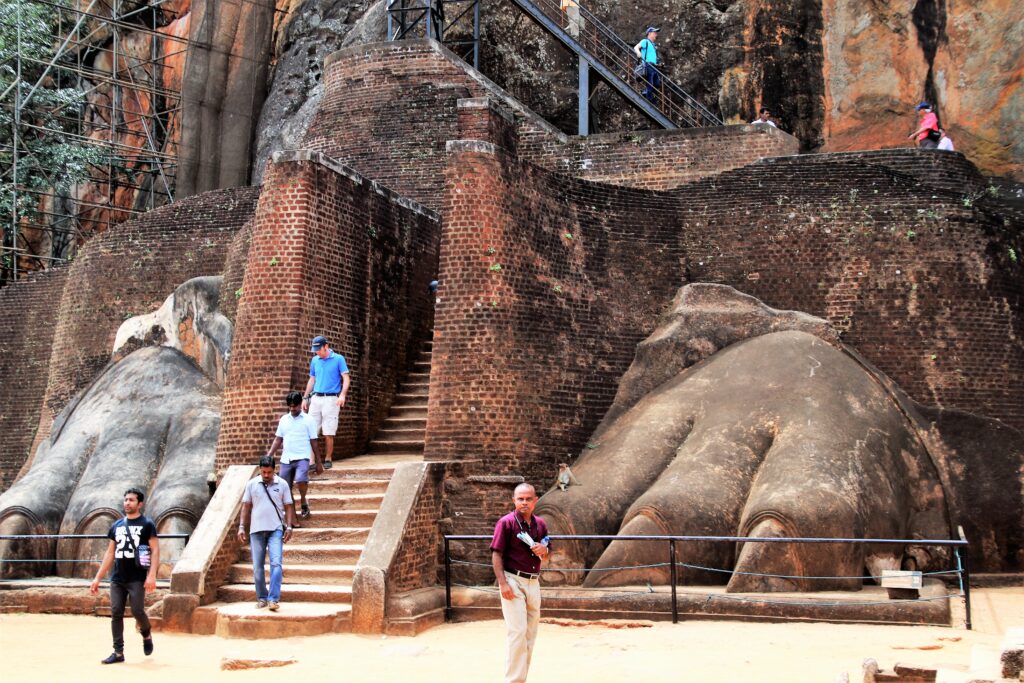
Halfway up the rock is a large plateau where you will find the entrance to the royal palace, famously guarded by two massive stone lion paws. This is why the fortress is called “Lion Rock.” Originally, a gigantic lion head sculpted from brick and plaster stood above these paws, and visitors had to walk through its open mouth to enter the palace complex. The rest of the lion figure was unfortunately destroyed over time.
5. The Incredible Ancient Hydraulics
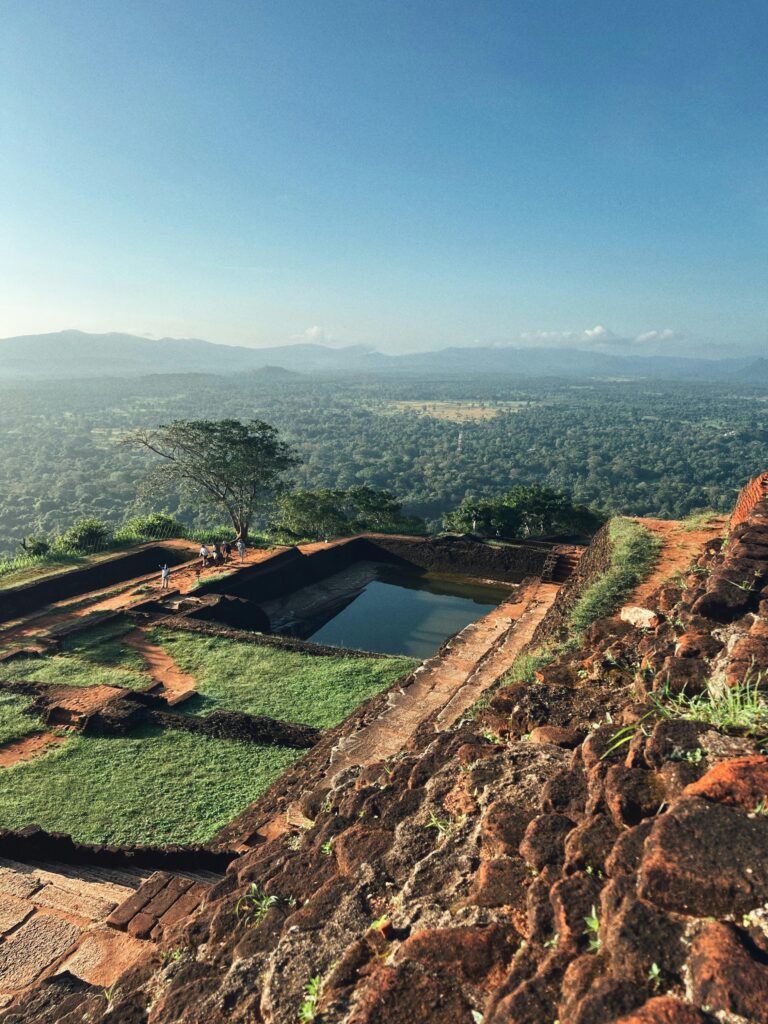
One of the most astonishing features of Sigiriya is its advanced water management system, which is still partially functional today. The elaborate gardens at the base of the rock feature a complex network of reservoirs, cisterns, and underground water pipes that transported water from miles away. Some of the fountains in the Water Gardens still spring to life during the rainy season, showcasing the remarkable engineering skills of the ancient Sinhalese.
Tips for visitors
Summary
Sigiriya Rock Fortress is more than just a historical monument; it is a testament to the advanced civilization, artistry, and engineering of ancient Sri Lanka. It’s a perfect destination for history buffs, nature lovers, and anyone looking to experience the rich cultural heritage of this island nation.